
Attic Insulation Pricing Breakdown: What Enterprise Homeowners Pay in 2026
Two quotes land in your inbox. One says $1,200 for blown-in. The other says $4,800 for spray foam. Both claim to fix the same cold bedroom over the garage. The gap isn’t profit margin. In our experience, the lower quote is usually incomplete, missing air-sealing, old material removal, or attic access labor that shows up later as a change order. Here’s what Enterprise homeowners actually pay in 2026, line by line, before signing anything.
If you’d rather have a specialist walk your attic and put real numbers on paper, call (877) 702-6273. We answer 24/7. Fast dispatch from 7am to 7pm, Sunday through Friday. Estimates are free.
What does attic insulation cost per square foot in Enterprise in 2026?
Most Enterprise attics fall into these per-square-foot ranges for a typical install, materials and labor included. The numbers below are estimated ranges for a straightforward job. Complex attics run higher, and the written estimate always sets the final price.
| Material | Typical cost per sq ft (installed) | Best fit |
|---|---|---|
| Blown-in fiberglass | $1.50 – $2.50 | Open, flat attic floors with few obstacles |
| Blown-in cellulose (GreenFiber) | $1.75 – $3.00 | Irregular framing, recycled-content preference |
| Open-cell spray foam (Icynene) | $3.50 – $5.50 | Air-sealing plus insulation in one pass |
| Closed-cell spray foam (Demilec) | $5.00 – $7.50 | Rim joists, knee walls, moisture-prone zones |
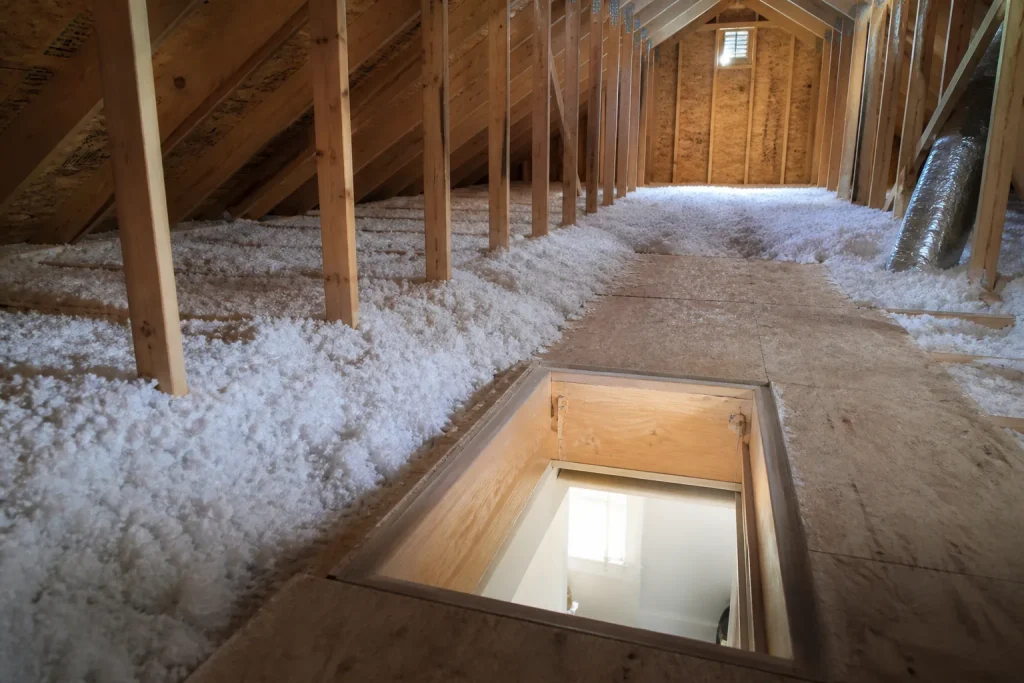
Notice the spread. A 1,200 sq ft attic in blown-in fiberglass and the same attic in closed-cell foam aren’t the same job at a different price. They solve different problems. Foam seals and insulates in one step; blown-in fills the floor cavity and leaves the bypasses leaking unless someone seals them first.
A typical whole-attic job in Enterprise runs from roughly $1,800 to $5,500 depending on material and scope. That range widens the moment removal or air-sealing enters the conversation, which is exactly where most quotes go quiet.
What hidden costs do most quotes leave out?
The advertised per-square-foot price rarely includes the work that makes insulation actually perform. These four line items drive most of the difference between a low quote and a complete one.
- Old insulation removal. Contaminated, wet, or compressed material has to come out before anything new goes in. Removal and disposal add labor and dumpster cost that a flat per-square-foot price won’t show.
- Air-sealing labor. Can lights, top plates, plumbing penetrations, and dropped soffits all leak conditioned air into the attic. Sealing them takes time and materials, and it’s the single most overlooked line in a blown-in quote.
- HVAC duct encapsulation. Ducts running through a hot attic lose cold air before it reaches the room. Encapsulating them is separate work with separate labor.
- Attic access limits. A tight scuttle, a low roofline, or a crowded mechanical platform slows the crew down. That time shows up in the price, or it shows up as a change order.
Any quote that skips these isn’t cheaper. It’s shorter. In our experience, the scope gap is the real reason quotes in Enterprise swing so wide on the same square footage.
Why can a 1,200 sq ft home cost more than a 2,000 sq ft home?
Because square footage measures the floor, not the leaks. What actually drives price is the linear footage of bypasses and the geometry between them. A small, older Enterprise home with a low-pitch roof, a dozen recessed cans, and a knee-wall assembly can take more crew time than a large, clean, open attic with nothing in the way.
Think of it this way:
- Square footage sets how much material you need.
- Linear footage of penetrations and corners sets how much labor you need.
Attic geometry is the quiet multiplier. A vaulted ceiling, a dormer, or a finished knee wall each add surface area and cutting time that a flat square-foot price can’t absorb. That’s why we measure both the floor area and the bypass count before quoting anything. A quote built only on square footage is a guess dressed up as a number.
What does a legitimate itemized quote look like?
A complete quote reads like a checklist, not a headline. Here’s what to expect from a quote you can trust in Enterprise.
- Scope of work spelled out: removal (yes or no), air-sealing, baffles at the eaves, and duct work, each as its own line.
- Material named and specified: which product, which brand, and what thickness or depth is being installed.
- Attic square footage stated, so you can check the math against your own measurements.
- What’s excluded written plainly, so nothing becomes a surprise change order after demo begins.
- A written price you sign off on before any work starts.
A low-ball quote usually fails on the last two items. It names a price and a material, then leaves the scope fuzzy. When removal or sealing turns up mid-job, the change order arrives. The fix is simple: ask for the exclusions in writing, and don’t sign until you have them. The right insulation for your home’s specific structure and climate needs depends on that scope, not on the lowest number.
What Nevada incentives and tax credits apply in 2026?
Two programs can reduce your out-of-pocket cost in Enterprise. Neither replaces a written estimate, so price the job first, then confirm eligibility.
- NV Energy programs. NV Energy runs energy efficiency programs that can offer rebates on qualifying insulation upgrades. Eligibility and amounts are set by the utility and can change, so confirm current terms directly with NV Energy before you schedule.
- Federal 25C tax credit. The federal 25C credit can apply to qualifying insulation improvements. Check the current IRS requirements for your situation and keep your receipts and manufacturer documentation.
Here’s the part worth knowing before you chase a rebate: incentives reward a proper install, not a quick one. A rebate on insulation that skips air-sealing leaves most of the savings on the table, because leaking bypasses still push conditioned air into the attic. Build the scope right first, then layer the incentive on top. Tax rules and utility terms are outside our control, so confirm the details with NV Energy and a tax professional.
When to call a pro
Some attic work is straightforward to look at and hard to do safely. If your attic has old insulation you can’t identify, moisture staining, or a tangle of unsealed penetrations, leave the install to a trained professional; spray foam in particular is applied with chemicals and heat that need proper handling and ventilation. A quick visual check of the attic floor and the access hatch is fine. Crawling around sealing cans and spraying foam is a job for people with the right equipment and the right training.
This is where a focused specialist beats a generalist. Our technicians have up to 9 years of experience, and all of our work is insulation: attic insulation, spray foam insulation, and blown-in. We install from eight leading brands, including Icynene for open-cell foam and Rockwool for mineral wool where fire and sound performance matter. You aren’t locked into one supplier’s material with us. Blown-in reaches every corner of an irregular attic floor, and foam seals and insulates in one step; we’ll tell you which your Enterprise home actually needs.
Related services in Enterprise: attic insulation, spray foam insulation, and blown-in insulation. We answer 24/7. Fast dispatch from 7am to 7pm, Sunday through Friday. Call (877) 702-6273 to schedule your free estimate.
The Bottom Line
The wide spread in Enterprise attic insulation quotes isn’t a pricing mystery. It’s a scope gap. Material choice sets part of the number, but removal, air-sealing, duct encapsulation, and attic geometry do the rest. When you compare quotes, compare the line items, not just the total. A $1,200 blown-in quote and a $4,800 spray foam quote aren’t solving different budgets; they’re solving the same problem with different completeness.
If you’re in Enterprise and need help, Attic Insulation Enterprise offers free estimates. We’re an insulation specialist, not a general contractor, so every recommendation is built around fit rather than whatever material we can move. Call (877) 702-6273. We answer 24/7. Fast dispatch from 7am to 7pm, Sunday through Friday. You’ll get a written quote that names the scope, states the price, and lists the exclusions before anything gets touched.
Frequently Asked Questions
Most Enterprise attics run about $1,800 to $5,500 for a typical install, with per-square-foot pricing from roughly $1.50 for blown-in fiberglass up to $7.50 for closed-cell spray foam. Those are estimated ranges; the written estimate sets the final price. Call (877) 702-6273 for a free quote.
Yes. The estimate is free and there’s no service-call fee. We measure the attic, check the bypasses, and write up the scope before you commit to anything. Call (877) 702-6273 to schedule your free estimate. We answer 24/7.
Most jobs finish in a single booked installation day, though removal, extensive air-sealing, or duct encapsulation can stretch it. We’ll tell you the timeline in the written quote so there are no surprises. Call (877) 702-6273 to talk through your attic.
No. We’re closed Saturday and open Sunday through Friday, 7am to 7pm. A call outside dispatch hours is booked into the next opening, Sunday through Friday, 7am to 7pm. Call (877) 702-6273 and we’ll set a free estimate.
Written by the team at Attic Insulation Enterprise.
Need Insulation Help?
Call Attic Insulation Enterprise - licensed & insured, here with fast help in Enterprise.
(877) 702-6273